
Harmony in Your Home: Introducing a New Dog to Your Pack.
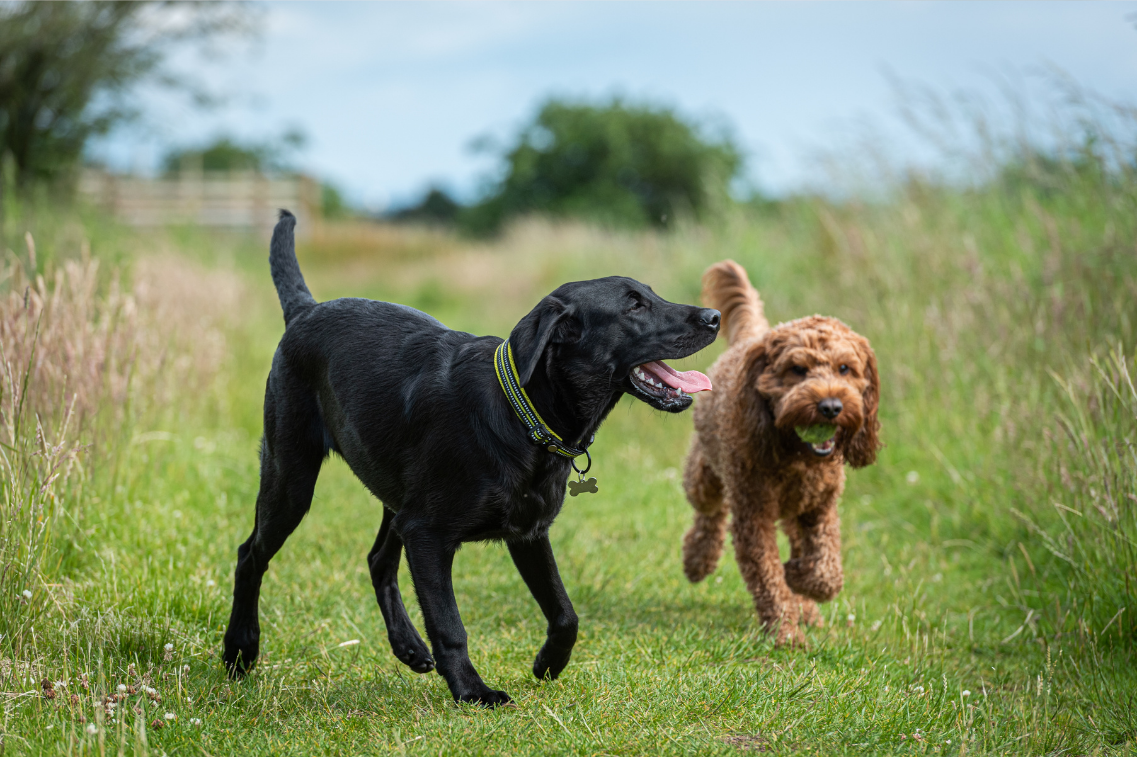
First introductions.
Bringing home a new dog is exciting, but it can also feel a little stressful in the beginning. That’s completely normal. My biggest advice is to keep the first introduction calm and simple. Let them meet without too much pressure and try to stay relaxed yourself. Dogs pick up on our energy more than we realize.
If the first meeting feels uneventful, that’s usually a good thing. They do not need to play right away or become best friends instantly. Sniffing, walking around together, giving each other space, or even mostly ignoring each other can all be positive. Every dog moves at their own pace, and some just need a little more time to warm up.
.webp)
Give them time to adjust.
The first few days at home are usually all about settling in. Your new dog is learning a brand new routine, and your current dog is adjusting to sharing their space. Keeping things calm and predictable can make a huge difference. Feed them separately, give each dog their own place to rest, and allow them quiet breaks throughout the day.
Try not to rush the relationship. Let trust build naturally over time. Short positive interactions go a long way, and a little patience in the beginning can make everything feel easier later on. Some dogs bond quickly, some take longer, but most do best when they’re given space and time to figure it out for themselves.
• Feed dogs separately for the first several days to avoid tension around food
• Pick up bones, chews, and favorite toys at first until you know how both dogs feel about sharing
• Give each dog their own crate, bed, or quiet space where they can relax alone
• Keep greetings calm when coming and going. Too much excitement can create tension fast
• Supervise all interactions in the beginning, even if they seem to be doing great
• Give both dogs one on one attention so your resident dog does not feel replaced
• Take walks together. Walking side by side can help dogs get comfortable with each other without pressure
• Do not force play or closeness. Let them choose how much interaction they want
• Expect an adjustment period. A few awkward moments early on are normal
• Watch body language. Loose bodies, soft faces, sniffing, and choosing to walk away are usually great signs
The biggest thing is patience. Some dogs become buddies overnight. Others take a little time. Slow and steady usually works best.
.webp)